Huperzine-A: The Most Drug-Like Ingredient in Neuro Sharp
Huperzine-A works through the same mechanism as several prescription Alzheimer’s medicines. That makes it interesting — and it’s why older adults, who are more likely to take those medicines or heart drugs, need to check it carefully.*
Check Today’s Price →Independent site · We may earn a commission from links. Disclosure
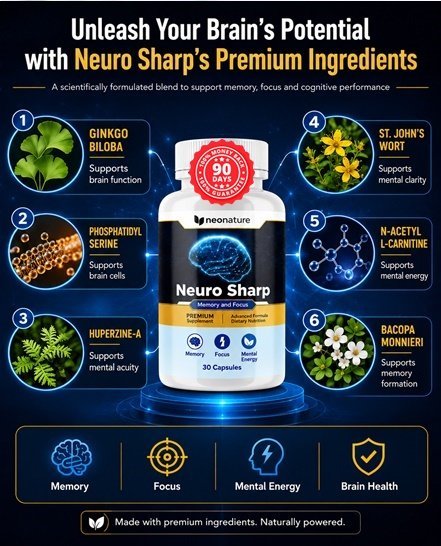
| Source | Chinese club moss (Huperzia serrata) |
|---|---|
| How it works | Slows the enzyme that breaks down acetylcholine |
| Role in Neuro Sharp | Acetylcholine support* |
| Studied amount | Micrograms — commonly 100–400 µg/day |
| Evidence | Limited, mostly in people with dementia |
| Medicine check? | Yes — Alzheimer’s and heart-rate medicines |
What It Is
Huperzine-A is a single compound purified from a club moss used in traditional Chinese medicine. It is potent: doses are measured in micrograms, millionths of a gram. It has been studied as a potential Alzheimer’s treatment and is sold in the US as a dietary supplement.
How It Works
After acetylcholine carries a signal between nerve cells, an enzyme called acetylcholinesterase breaks it down. Huperzine-A reversibly slows that enzyme, so acetylcholine stays active longer.* Donepezil, rivastigmine and galantamine — prescription Alzheimer’s medicines — work the same way.
What Studies Show
Most research comes from trials in people with Alzheimer’s disease or vascular dementia, many conducted in China. Systematic reviews have found some benefit on cognitive scores but flagged small, lower-quality trials. A US phase II trial in mild-to-moderate Alzheimer’s, published in Neurology in 2011, did not show a significant benefit at its main dose. Good studies in healthy older adults with ordinary forgetfulness are lacking.
What It Means After 50
The mechanism is plausible, but the risk–benefit balance depends on what else you take. If you or a parent is on an Alzheimer’s medicine, Huperzine-A shouldn’t be added without the prescriber’s advice. And because acetylcholine also slows the heart, anyone with a slow pulse or on a beta-blocker should ask first.
Studied Amounts
Commonly 100–400 micrograms a day, often split into two doses.
Side Effects
Side effects reflect more acetylcholine activity throughout the body: nausea, vomiting, diarrhea, sweating, blurred vision, muscle twitching and a slowed heart rate.
Who Should Avoid It or Ask First
- People taking donepezil, rivastigmine or galantamine.
- People on beta-blockers or with a slow or irregular heartbeat.
- People with epilepsy, asthma or COPD, stomach ulcers, or urinary or bowel blockage.
- Anyone taking anticholinergic medicines (some bladder and allergy drugs) — opposite effects.
Its Role in Neuro Sharp
Huperzine-A is the “preserve” half of the formula’s acetylcholine strategy; Alpha-GPC is the “supply” half. Don’t add other products containing Huperzine-A.
Bottom Line
Huperzine-A has a clear mechanism and limited evidence, and it’s the ingredient most likely to clash with medicines older adults take. Check it first.*
Questions for Your Doctor
- Is my heart rate low enough that Huperzine-A could be a problem?
- Do any of my medicines act on acetylcholine?
- Should my pulse be checked after I start?
Sources
- PubMed: Huperzine A systematic reviews
- PubMed: Phase II trial of huperzine A in mild to moderate Alzheimer disease
Frequently Asked Questions
What does Huperzine-A do?
It slows the enzyme that breaks down acetylcholine, a messenger involved in memory.
Can I take Huperzine-A with donepezil?
Not without your doctor’s advice; they work the same way.
Is Huperzine-A safe for the heart?
It can slow the heart rate. Ask first if you have a slow pulse or take a beta-blocker.
How much Huperzine-A is studied?
Typically 100–400 micrograms a day.
*These statements have not been evaluated by the Food and Drug Administration. Neuro Sharp is not intended to diagnose, treat, cure or prevent any disease. Individual results vary. This page is for information only and is not medical advice.